Skip to content

AutoSTEM – Engaging Students in Automation and Control

Hands-on robotics and open educational resources for introducing secondary school students to automation, control systems and STEM.
AutoSTEM project logo

About the project

AutoSTEM is an Erasmus+ small-scale partnership that brings together education, research and industry to make automation and control systems more accessible to secondary school students.
Between October 2025 and September 2026, the partners developed and tested a robotics kit, educational lessons and practical workshop activities in Italy and Sweden. The project promotes hands-on STEM learning, interdisciplinary skills and inclusive participation, with particular attention to encouraging girls’ engagement in robotics, automation and control.
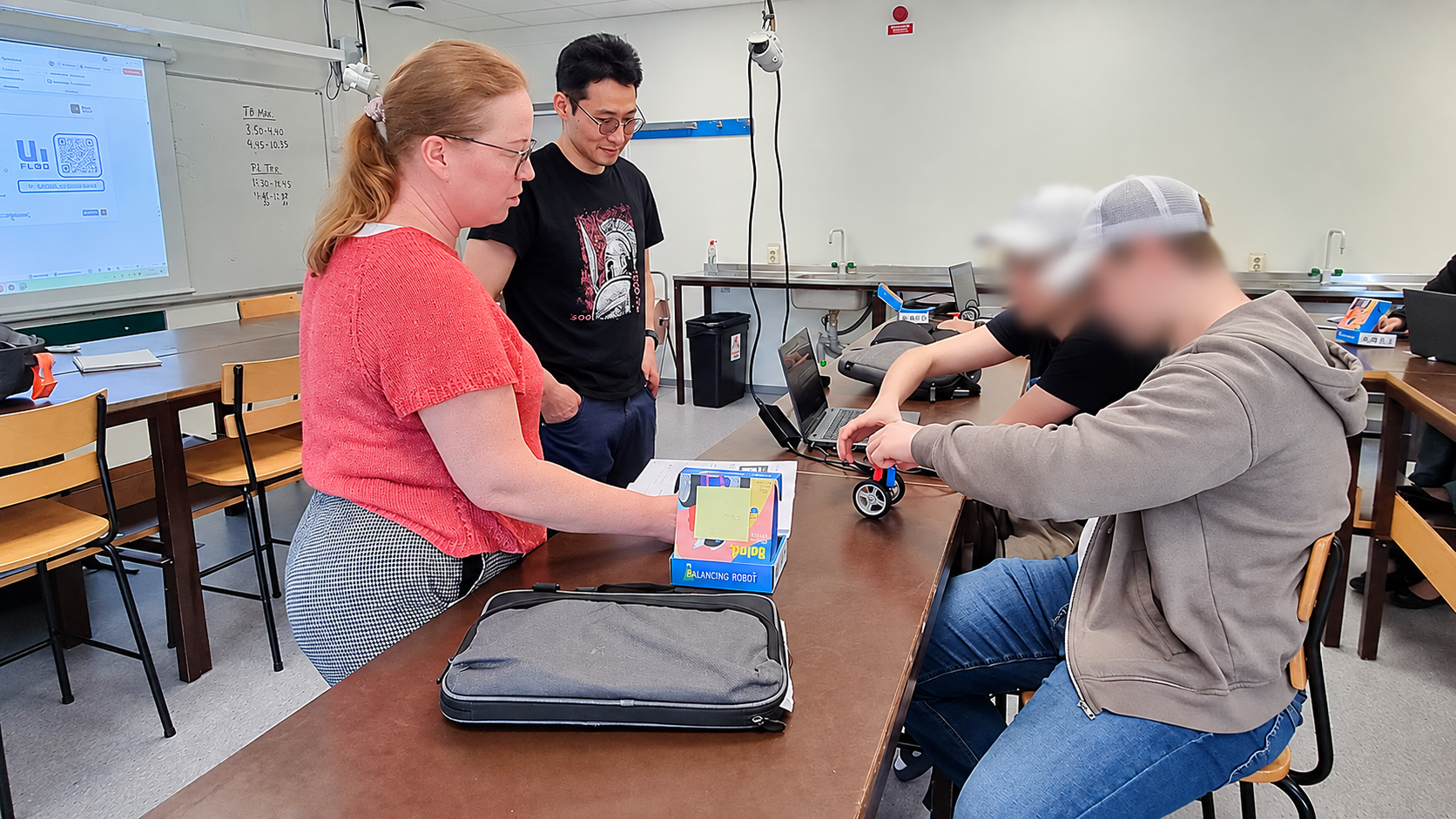
Students working on a balancing robot during an AutoSTEM workshop

Project at a glance

127

Students surveyed

10

Classes

2

Countries

Pilot activities involved 10 classes across 6 schools in Italy and Sweden. The evaluation included 127 student respondents and explored learning outcomes, perceptions of robotics and control, and participation in STEM.

Supporting girls’ engagement in STEM was a core objective of AutoSTEM. Female respondents showed higher post-project perceptions of robotics and control in both Italy and Sweden.
Open resources

Explore the educational materials and digital resources developed within AutoSTEM.

Educational lessons

Educational lessons

Three lesson modules and supporting educational materials
introducing automation and control through practical STEM activities.

AutoSTEM Virtual Toolkit

AutoSTEM Virtual Toolkit

Explore B.R.I.D.G.E., the AutoSTEM
Virtual Toolkit for learning control
systems and computational thinking
through interactive simulation
and PID experiments.

Pilot Evaluation

Results report

A concise report summarising the
pilot activities in Italy and Sweden,
participant feedback, key findings
and lessons learned.

Educational
lessons

Educational lessons

Three lesson modules and supporting educational materials
introducing automation and control through practical STEM activities.

AutoSTEM
Virtual Toolkit

AutoSTEM Virtual Toolkit

Explore B.R.I.D.G.E., the AutoSTEM
Virtual Toolkit for learning control
systems and computational thinking
through interactive simulation
and PID experiments.

Pilot
Evaluation

Results report

A concise report summarising the
pilot activities in Italy and Sweden,
participant feedback, key findings
and lessons learned.

From theory to practice

AutoSTEM guides students from fundamental concepts to virtual experimentation and hands-on robotics.
Lesson slides

Classroom learning

Students are introduced to automation and control through structured lessons combining theory, examples and practical STEM activities.

Virtual experimentation

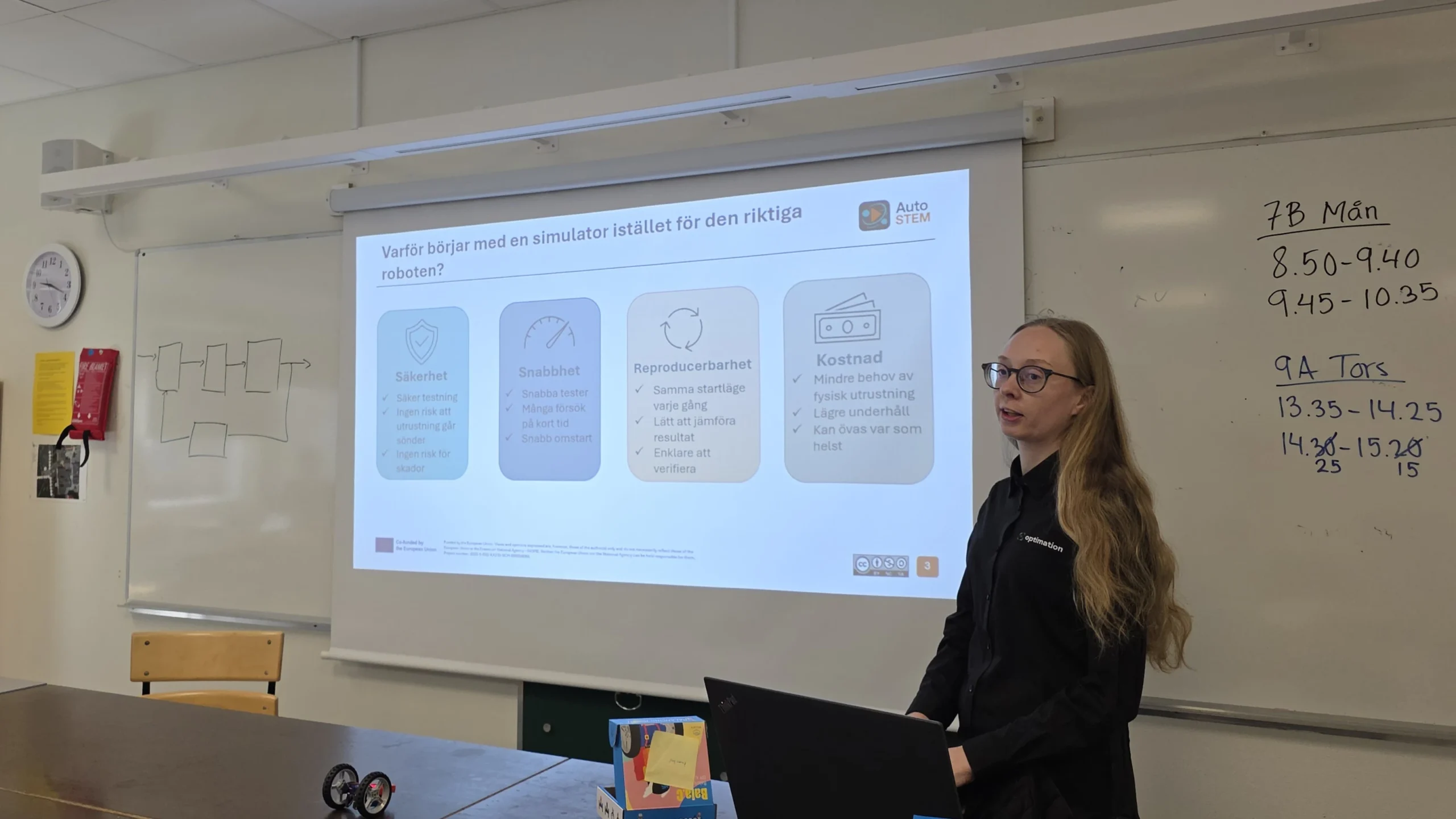
Students then explore control systems through the AutoSTEM Virtual Toolkit, using simulation, visual programming and PID experiments before moving to the physical robot.
Virtual Toolkit screenshot
physical toolkit

Physical robotics

Finally, students apply the concepts to the physical BalaC robotics kit through hands-on activities involving assembly, programming and testing.

Partnership

AutoSTEM is coordinated by ANcybernetics in partnership with Università Politecnica delle Marche – LabMACS and Optimation AB.

Project information

Co-fundedbytheEU
Erasmus payoff

EU funding

Funded by the European Union. Views and opinions expressed are however those of the author(s) only and do not necessarily reflect those of the European Union or the Erasmus+ National Agency – INDIRE. Neither the European Union nor the granting authority can be held responsible for them.

Project code: 2025-1-IT02-KA210-SCH-000358066
Project period: October 2025 – September 2026
Programme: Erasmus+ KA210-SCH – Small-scale partnerships in school education

Co-funded by the European Union
Erasmus+

EU funding

Funded by the European Union. Views and opinions expressed are however those of the author(s) only and do not necessarily reflect those of the European Union or the Erasmus+ National Agency – INDIRE. Neither the European Union nor the granting authority can be held responsible for them.

Project code: 2025-1-IT02-KA210-SCH-000358066
Project period: October 2025 – September 2026
Programme: Erasmus+ KA210-SCH – Small-scale partnerships in school education